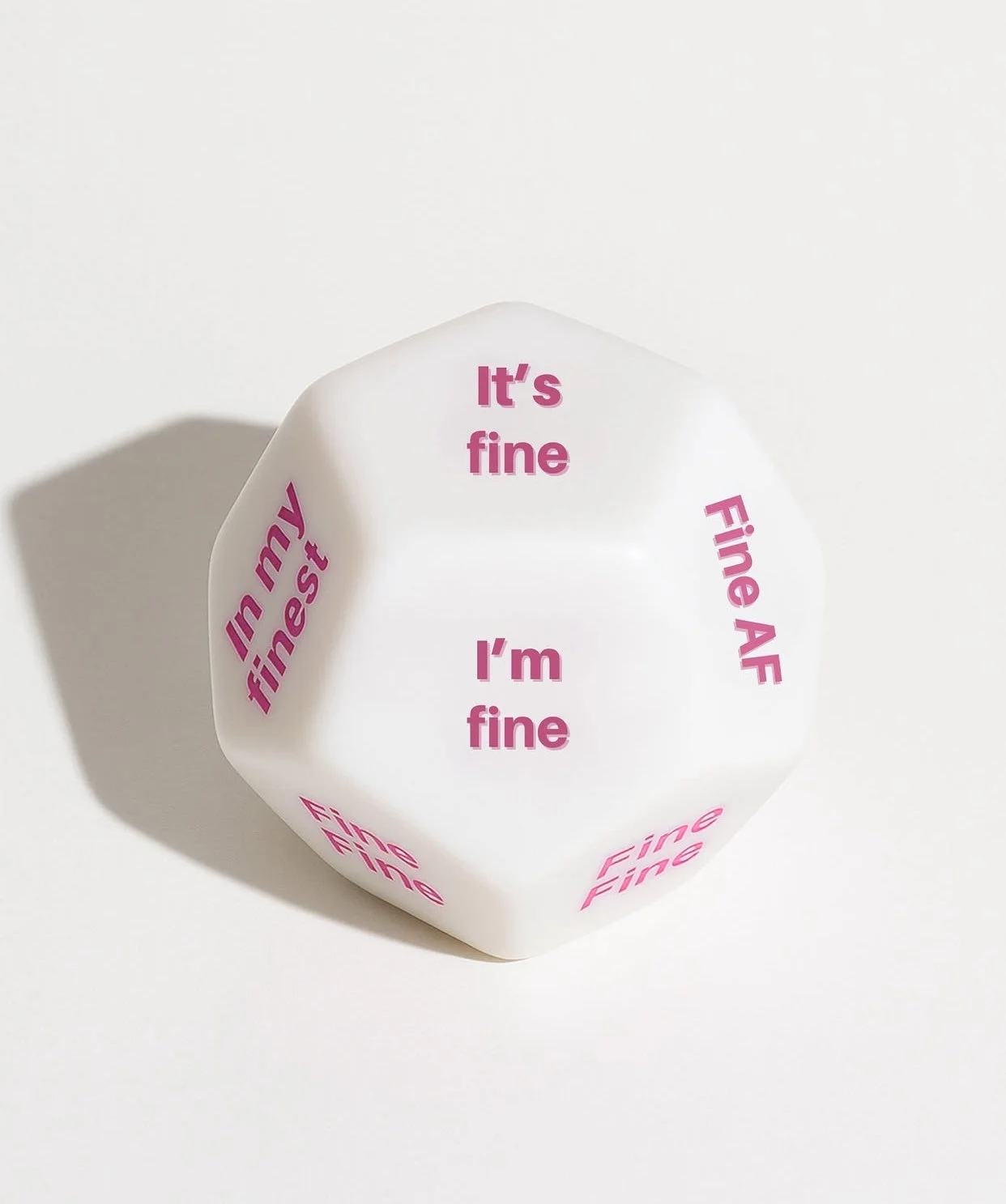
Ep. 72/ ActiNG FINE WHILE DROWNING INSIDE
WITH Host melissa D. Barry
Published may 31st , 2026 - available on all podcast platforms.
listen &
review on:
Don't forget to leave a review on any of them, it helps a lot.


There is a specific kind of exhaustion that rarely gets recognized for what it actually is.
It does not always look like burnout. It does not always look like struggle.
It looks like answering emails on time, showing up composed, staying productive, holding conversations, meeting expectations, and managing everything “well” while something underneath all of that is quietly unraveling.
If that feels familiar, you are not imagining it.
This is one of the hidden realities of high-functioning anxiety, especially among ambitious women who have learned to keep performing no matter how much pressure they are carrying internally.
In this episode of Conscious Matters®, we explore the emotional and psychological cost of constantly holding yourself together, the exhausting gap between how you appear and how you actually feel, and the role the inner critic plays in maintaining that performance.
Because high-functioning does not automatically mean fine
The Performance of Calm Is Not a Character Flaw
One of the first things worth understanding is that the performance of calm usually developed for a reason.
For many high-achieving women, staying composed became a form of protection. A way to stay respected, capable, accepted, or emotionally safe in environments where struggling openly did not feel like an option.
The issue is not that the pattern developed.
The issue is that eventually the performance becomes automatic.
What once protected you can slowly become the very thing disconnecting you from yourself.
And when you have been functioning this way for years, even slowing down enough to acknowledge what you truly feel can start feeling uncomfortable, unfamiliar, or even unsafe.
That is why so many women continue pushing through emotional exhaustion while telling themselves they are “fine.”
The Exhaustion Nobody Sees
One of the most draining parts of high-functioning anxiety is the constant management happening beneath the surface.
Managing how you come across; how much you reveal; your emotions before anyone else notices them; the pressure to keep everything together.
That kind of emotional masking requires energy. A lot of it.
And because the external performance often still looks successful, the internal exhaustion tends to get minimized, dismissed, or rationalized away.
You tell yourself:
“Other people have it worse.”
“At least I’m still functioning.”
“I just need to push through this week.”
But exhaustion that is ignored does not disappear.
It compounds quietly over time.
What the Inner Critic Has to Do With It
The inner critic is not just the voice that points out flaws or mistakes.
For many high-functioning women, it becomes the enforcer of the performance.
It is the part constantly monitoring how you sound, how you appear, whether you said too much, showed too much, felt too much, or revealed too much vulnerability.
It pushes you to keep it together before anyone notices the pressure underneath.
And over time, something painful happens:
The inner critic can become the only voice you are fully honest with.
Not your friends.
Not your colleagues.
Not even yourself consciously.
Just the internal voice repeating:
“You should be handling this better.”
“Don’t let people see you struggle.”
“Keep going.”
“Don’t fall behind.”
That is a tremendous amount of authority to hand to a voice rooted in fear and pressure.
Closing the Gap Does Not Require Falling Apart
One of the biggest misconceptions around healing high-functioning anxiety is believing that acknowledging your internal reality means publicly unraveling.
It does not.
This is not about collapsing your life or abandoning responsibility.
It starts much more quietly than that.
It starts in the private moments where you stop performing for yourself first.
Where you allow yourself to admit:
“I’m overwhelmed.”
“I’m tired.”
“This pressure is affecting me.”
“I cannot keep relating to myself this way.”
Small moments of emotional honesty begin closing the gap between the version of you everyone sees and the version of you carrying everything internally.
And that shift matters more than most people realize.
IN THIS EPISODE, WE TALK ABOUT:
Why the performance of calm often develops as a survival strategy
How high-functioning anxiety can hide beneath competence and productivity
The emotional exhaustion of constantly masking your internal experience
How the inner critic reinforces perfectionism and emotional suppression
Why the gap between outer composure and inner reality becomes so draining
What it means to stop performing for yourself first, not just for others
Why emotional honesty is not weakness, but part of healing and self-trust
And so much more ...
~ Want to go deeper?
If this episode resonated, start by downloading the Mindset Reset Starter Guide. It’s a free workbook designed to help you become aware of how your inner critic shows up and how to respond with more calm, clarity, and confidence.
When you’re ready to deepen the work, download the “From Pressure to Empowerment” eBook, which guides you through five powerful mindset shifts to release inner pressure and rebuild self-trust from the inside out, or get the Empowerment Bundle to integrate your insights at a deeper level.
Ready to be supported in your transformation? Book your private coaching session with me by clicking here to explore the 6-week Empowerment Mindset Reset program to integrate this work at a deeper, embodied level.
Press play and make your inner critic your best ally.
Like, comment, and subscribe for more grounded, empowering content on conscious living and holistic wellness.
Listen up to this gem!
Namaste listeners,
M -